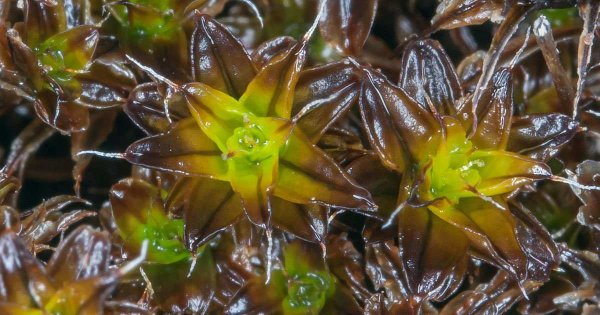
Chinese researchers have reported that a desert moss, Syntrichia caninervis, can withstand extreme cold, radiation, and near-total dehydration, conditions that mimic the harsh environment on Mars. The findings, published in the journal The Innovation, suggest that this plant could be a candidate for future space colonization efforts, though experts emphasize that significant hurdles remain.
The moss, which grows in some of Earth's most unforgiving places, from the Antarctic to the Mojave Desert, was subjected to simulations of the Martian surface. The Red Planet presents formidable challenges: average temperatures hover around minus 80 degrees Fahrenheit, the atmosphere is about 100 times thinner than Earth's, and it consists mostly of carbon dioxide with very little oxygen.
In their study, the team exposed the moss to five years of storage at minus 112 degrees Fahrenheit, and it not only survived but also bounced back after being almost completely dehydrated. The plant also showed surprising resistance to gamma radiation, with some specimens even growing under certain doses.
Why This Moss Matters for Space Missions
Growing plants on Mars is seen as a key step for long-term human missions, as plants can convert carbon dioxide and water into oxygen and carbohydrates—essentially the air and food that astronauts need. However, the desert moss is not edible, as noted by Stuart McDaniel, a moss expert at the University of Florida, who spoke to The Guardian. He pointed out that while the moss could provide other services, like helping other plants grow, it is not a food source.
Agata Zupanska, a researcher at the SETI Institute, echoed that sentiment, saying the moss is not tasty and would not be a good salad ingredient. She added that while the experiments are promising, claiming the moss is ready to terraform Mars would be an exaggeration.
The Chinese researchers are optimistic, writing in their paper that the moss could be taken to Mars or the moon to test plant colonization and growth in outer space. But McDaniel cautioned that the experiments do not prove the moss could produce significant oxygen under Martian conditions or that it could reproduce and proliferate in that environment.
Despite the uncertainties, the study adds to a growing body of research on using hardy plants for space exploration. Zupanska believes that extraterrestrial greenhouses are within reach, and moss could play a role in those closed environments.
The findings open the door for further investigation, but as McDaniel noted, we are not there yet. The moss's resilience is a step forward, but the path to growing plants on Mars will require more than just a hardy species.