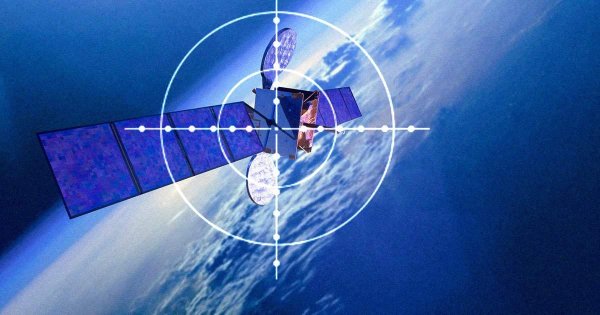
In a stark acknowledgment of the new frontline in global security, the vice chief of space operations for the US Space Force, General David Thompson, has stated that American government satellites are being targeted by Chinese and Russian assets on a daily basis. The remarks, made in an interview with The Washington Post, paint a picture of a persistent and evolving campaign against US space-based infrastructure.
Thompson described these actions as “reversible attacks,” a term that encompasses non-destructive methods such as laser dazzling, radio frequency jamming, and cyber intrusions. Unlike kinetic strikes that destroy satellites, these tools are designed to temporarily blind, disrupt, or hijack systems without leaving permanent damage. Yet their frequency and sophistication signal a deliberate strategy to erode US military and civilian space capabilities.
“The threats are really growing and expanding every single day,” Thompson told the Post. “We’re really at a point now where there’s a whole host of ways that our space systems can be threatened.” His comments, reported by columnist Josh Rogin, add a sobering layer to the ongoing discussion about the militarization of space.
The general’s disclosure comes amid a series of recent demonstrations by both Beijing and Moscow of their growing space warfare prowess. In August, China conducted a hypersonic missile test that reportedly caught Washington off guard. The weapon, capable of carrying nuclear warheads, is designed to evade existing missile defense systems, and its potential use in space operations raises the stakes for orbital conflict.
Russia, for its part, tested an anti-satellite missile in the fall, an action that generated a field of debris that threatened the International Space Station and its crew. Moscow has downplayed the incident, but the event underscored the tangible dangers posed by space weapons, not just to military assets but to human life in orbit.
Why This Matters
Thompson’s remarks shift the conversation about space warfare from hypothetical to operational. The daily nature of these reversible attacks suggests that the United States is already engaged in a low-level conflict in space, one that could escalate if deterrence fails. For policymakers, the challenge is to protect vital satellite services—from GPS to communications—while avoiding a spiral that could lead to a full-blown space war.
The general’s warning also highlights the need for international norms and agreements to prevent space from becoming an unregulated battleground. As both China and Russia continue to advance their counterspace capabilities, the pressure on the US to modernize its own space defenses grows.
The full interview appears in The Washington Post, which also reported on the broader shadow war unfolding in orbit. For now, the message from the Space Force is clear: the fight for space is already here, and it is intensifying.