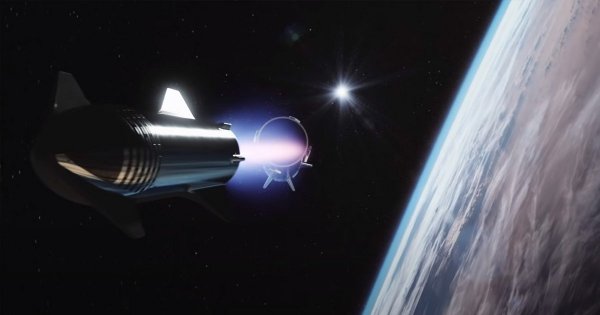
SpaceX's next-generation Starship, already slated for lunar landings and potential Mars colonization, might also become the backbone of a new class of space observatory. In a Wednesday post on X, CEO Elon Musk floated the notion that the spacecraft itself could provide the structural support for a giant telescope, one capable of resolving images with ten times the clarity of NASA's Hubble Space Telescope.
Musk credited the concept to Saul Perlmutter, an astrophysicist at Lawrence Berkeley National Laboratory, who first suggested the idea to him. The proposal arrives as Hubble, now in its third decade of service, remains sidelined by a software fault that forced a halt to its scientific observations last month. NASA engineers are still working to restore the telescope's operations.
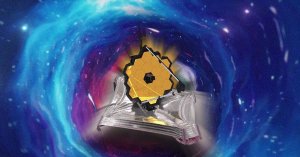
The timing of Musk's suggestion underscores the growing interest in next-generation space observatories, particularly as Hubble's capabilities age. While NASA's James Webb Space Telescope has captured headlines with its infrared views, Musk's vision would leverage Starship's enormous size and payload capacity to place a much larger optical instrument in orbit.
Starship's Expanding Role
Starship is being developed as a fully reusable super heavy-lift launch system. In earlier posts, Musk described a "dedicated deep space variant" that could be refueled in orbit, enabling it to carry heavier payloads to the Moon and Mars. According to a chart released by NASA's Launch Services program, an expendable version of SpaceX's Falcon Heavy rocket can send more than 26,000 pounds to Mars. Starship, if development proceeds as planned, could increase that capacity nearly tenfold.
However, the spacecraft has yet to reach orbit. The first prototype is expected to attempt an orbital flight in the coming weeks, with a planned splashdown in the Pacific Ocean off the coast of Hawaii. Until that milestone is achieved, the telescope concept remains speculative.
Musk's suggestion also aligns with his broader ambitions for Starship, which include cleaning up orbital debris and establishing a permanent human presence on Mars. The idea of repurposing the spacecraft as an astronomical platform would extend its utility beyond transportation, potentially continuing Hubble's legacy of discovery.
No official plans or timelines have been announced for the telescope concept, and it remains unclear how such a structure would be assembled or operated. But the proposal highlights the potential for commercial spacecraft to play a role in future scientific missions.