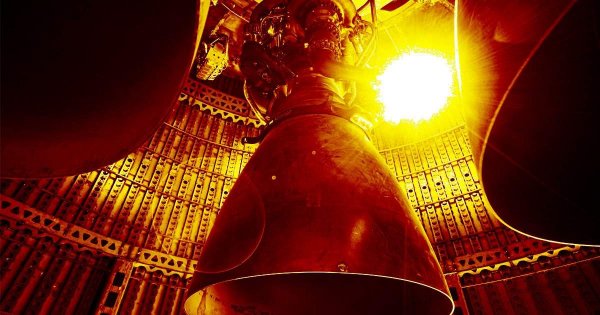
In a milestone for its next-generation propulsion system, SpaceX's Raptor engine has achieved a chamber pressure of 330 bar, a figure CEO Elon Musk announced via Twitter on Monday. The test, which Musk said did not result in an explosion, marks the highest pressure ever recorded for a rocket engine, surpassing the previous benchmark set by the Soviet RD-701 engine in the 1980s, as reported by Teslarati.
The Raptor engine is the centerpiece of SpaceX's Starship program, designed to power the massive spacecraft and its Super Heavy booster. The Starship will be equipped with six Raptor engines, while the Super Heavy booster is expected to require nearly 40. The pressure test is a critical step, but engineers still need to demonstrate that the engine can sustain such pressures during long-duration burns, typically lasting five to ten minutes, and that it can be reused for multiple flights.
[IMG_1]
The recent test follows the first full-scale prototype's flight earlier this month, which used a single Raptor engine. That flight, designated SN5, reached an altitude of 150 meters. The next test flight, using the SN8 prototype, is expected to employ three engines and target a maximum altitude of 20 kilometers, a significant leap in altitude and complexity.
Scaling Up Production and Testing
According to Teslarati, SpaceX will need to ramp up Raptor engine production significantly to meet the demands of the Starship program. The company must also verify that the engines can maintain pressure over extended burns, a requirement for orbital missions. Whether the Raptor, in a Falcon Heavy booster configuration, can achieve orbit remains an open question, as the engine's performance in that role has yet to be proven.
[IMG_2]
The pressure test result, while impressive, is just one of many hurdles. The Raptor engine's durability and reliability under repeated use are yet to be fully established. SpaceX has not released detailed data on the test, and independent verification is pending. The company's iterative approach to development, which involves frequent testing and rapid iteration, suggests that more data will be forthcoming as the SN8 test approaches.
The SN8 test, scheduled for later this year, will be a key indicator of the Raptor engine's capabilities in a multi-engine configuration. If successful, it will bring SpaceX closer to its goal of using Starship for missions to the Moon, Mars, and beyond. However, the timeline for these missions remains uncertain, and the company has a history of delays.
For now, the 330 bar record stands as a testament to the engineering progress at SpaceX, but the path to operational use is still long. The next few months will be critical as the company continues to test and refine the Raptor engine, with the SN8 flight serving as a major milestone.