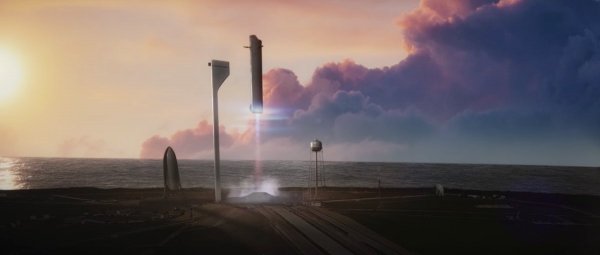
SpaceX chief executive Elon Musk indicated on Monday that the company is on the verge of releasing new details about its architecture for sending humans to Mars, a project that has been in the works for years. In response to a query on Twitter, Musk said the update is "almost there" and could arrive "in a few months," a timeline that would place the announcement around September, roughly one year after he first unveiled the plan.
The forthcoming update is expected to clarify two key components of SpaceX's Mars strategy: the Interplanetary Transport System (ITS), a reusable spacecraft designed to carry passengers, and the BFR, a massive rocket intended to launch it into orbit. The ITS, formerly known as the Mars Colonial Transporter, is envisioned as a vehicle that could ferry people to the Red Planet at a cost of $200,000 per person, according to earlier statements from the company.
The BFR, which stands for "Big F*cking Rocket," is anticipated to surpass the capabilities of SpaceX's existing Falcon 9 and Falcon Heavy rockets, potentially becoming the most powerful launch vehicle ever constructed. However, specific technical details about both systems have remained sparse, and the upcoming announcement is expected to fill in some of those gaps.
Musk's tweet came in response to a question from Twitter user @RITSPEX, who asked about architectural changes to the ITS and BFR. The exchange was noted by Inverse, which highlighted the potential timing of the announcement relative to the first anniversary of Musk's original Mars presentation.
Global Race to Mars Intensifies
While SpaceX has been a pioneer in outlining a concrete Mars plan, other entities have also been advancing their own initiatives. NASA has detailed a two-phase approach to reach the Red Planet, and China has announced intentions to land a mission there by the end of the decade. The United Arab Emirates has also entered the fray, and Boeing, a veteran aerospace firm, has expressed its ambition to compete directly with SpaceX in Mars exploration.
These efforts underscore a growing international interest in Mars as a destination for human exploration, driven by its relative proximity to Earth and its position in the solar system, which makes it a prime candidate for potential colonization. However, as Musk's timeline suggests, the technical hurdles remain significant, and the need for powerful launch systems is a common challenge across all programs.
The upcoming SpaceX update is likely to be closely watched by both space enthusiasts and industry observers, as it may provide the first concrete details on the vehicles that could one day carry humans to another planet. Until then, the specifics of the ITS and BFR remain largely under wraps, with Musk's tweet serving as the latest signal that progress is being made behind the scenes.