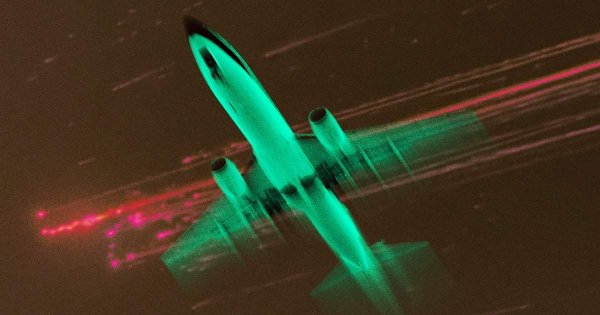
The mid-air disintegration of SpaceX's Starship upper stage on Thursday evening sent a cascade of fiery fragments over the Caribbean, forcing a wide swath of commercial air traffic to take evasive action. According to flight tracking service FlightRadar24, dozens of aircraft—including cargo planes and passenger jets operated by JetBlue and American Airlines—either changed course or were redirected to alternate airports to avoid the falling debris. Some pilots executed sharp 180-degree turns, while others circled to wait out the hazard.
The Federal Aviation Administration (FAA) confirmed it had established a “debris response area” near the incident zone, briefly slowing and diverting flights in the vicinity. The disruption also rippled into Florida, where departures from Miami and Fort Lauderdale airports were held for roughly 45 minutes.
The failure occurred about eight and a half minutes after liftoff, during the ascent burn of the Starship vehicle—the 171-foot-tall upper stage. The spacecraft had successfully separated from its Super Heavy booster, which later returned to Earth and was caught by the launch tower's mechanical arms, a feat that had been achieved in previous flights. But moments after separation, mission control lost communication with the upper stage, leading to what SpaceX euphemistically calls a “rapid unscheduled disassembly.”
SpaceX communications manager Dan Huot told Reuters, “We did lose all communications with the ship—that is essentially telling us we had an anomaly with the upper stage.” Preliminary findings, shared by CEO Elon Musk on social media, point to a liquid oxygen leak in the cavity above the engine firewall, which caused pressure to build beyond the venting capacity. Musk added that the company would add fire suppression and increase vent area in future iterations, and he expressed hope that the next launch could occur within a month.
Astrophysicist Jonathan McDowell, analyzing telemetry from the official livestream, noted a rapid succession of engine failures preceding the explosion. The cause of those failures and their connection to the blast remain under investigation.
This was the seventh test flight of the Starship system, and it marked a sobering step back from recent successes. Earlier prototypes had reached orbit and splashed down intact in the Pacific, making this loss particularly notable. Given the spectacular nature of the destruction, the FAA is likely to require a mishap investigation, as it has after previous Starship incidents, which would ground the vehicle and delay its development timeline.
Despite the setback, Musk struck a characteristically upbeat tone, posting on X: “Success is uncertain, but entertainment is guaranteed!” He also noted that nothing so far suggested the next launch would be pushed beyond next month, pending the outcome of the investigation.