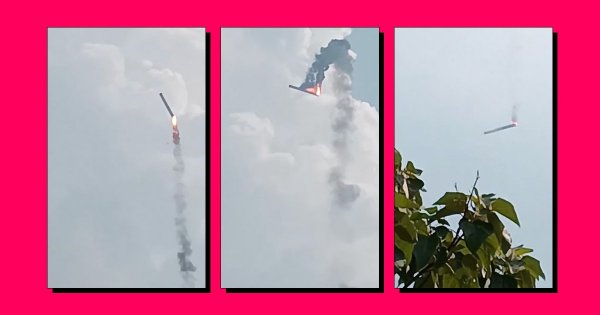
A routine ground test of a Chinese commercial rocket turned into an unplanned launch on Sunday, sending the booster soaring over a city before it slammed into a mountainside and burst into flames. The incident occurred in Gongyi, a city of roughly 800,000 people in central China's Henan province, during what was meant to be a static firing of the Tianlong-3 rocket's first stage.
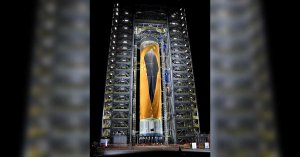
Space Pioneer, the Beijing-based company behind the rocket, acknowledged the mishap in a statement posted to its official WeChat account. According to a translation of that statement, the test was proceeding normally when the booster separated from its test stand due to a “structural failure.” The onboard computer then automatically shut down, and the rocket fell into a mountainous area about 1.5 kilometers (0.93 miles) southwest of the test bench, where it disintegrated on impact.
Video footage circulating on Chinese social media and local news outlets showed the rocket streaking across the sky before crashing into a wooded hillside. The Gongyi emergency management service confirmed that the crash ignited a forest fire, which was quickly extinguished. Both Space Pioneer and local authorities said no one was injured in the incident.
The Tianlong-3 is a two-stage, reusable rocket that bears a strong resemblance to SpaceX's Falcon 9 in design and capability. Both vehicles are built to be reusable and are capable of lifting off with a mass of roughly 600 tons. However, while the Falcon 9 has undergone hundreds of test flights, the Tianlong series is still in its early development phase, with far fewer launches to its name.
The choice of test site has drawn scrutiny. Space Pioneer conducts its ground tests in a densely populated urban area, unlike SpaceX, which typically tests its rockets in remote, sparsely inhabited regions of the United States. The proximity of the test to Gongyi's population made the accident a close call, as the rocket could have caused far more damage had it veered toward the city.
Local authorities have not announced any formal investigation, but the incident raises questions about the safety protocols of China's rapidly expanding commercial space sector. The Tianlong-3 is intended to be a workhorse for satellite launches, and Space Pioneer has positioned itself as a key player in China's private aerospace industry. The company has not yet commented on how the structural failure occurred or what changes it will make to prevent a recurrence.
For now, the immediate aftermath is limited to a scorched hillside and a public relations challenge for a company hoping to compete on the global stage. The accident serves as a reminder that even routine tests carry inherent risks, especially when conducted close to civilian populations.