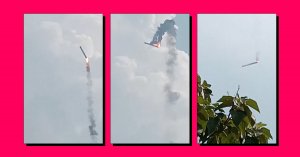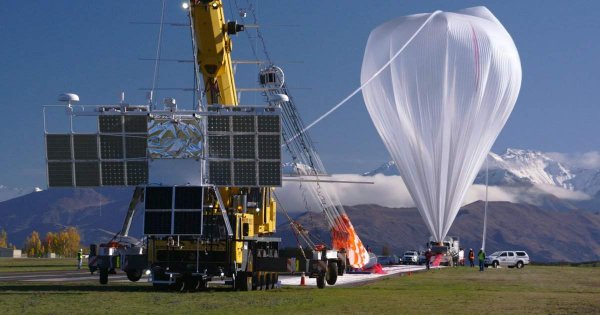
A NASA scientific balloon carrying a two-ton cosmic ray observatory crashed into the Pacific Ocean off the coast of New Zealand just 36 hours after launch, following a leak that prevented the craft from maintaining altitude. The agency confirmed the loss in a statement, noting that ground teams attempted to compensate by releasing ballast, but the balloon could not stay aloft.
The balloon was a super pressure design, part of NASA's effort to develop long-duration, heavy-lift platforms for high-altitude research. Its payload, the Extreme Universe Space Observatory 2 (EUSO-2), was intended to detect ultra-high energy cosmic ray particles as they entered Earth's atmosphere, helping scientists trace their origins.
According to NASA, the balloon's descent was deliberate in one respect: to minimize harm to marine life, the craft was engineered so that the heavy payload would drag it to the ocean floor as quickly as possible. That design feature now means recovery of the instrument is highly unlikely.
Why the Balloon Failed
NASA has labeled the incident an “anomaly” and has yet to determine the root cause. While the agency stopped short of saying the balloon popped, the rapid loss of pressure and the inability to stabilize altitude point to a structural failure. Super pressure balloons are built to maintain a positive internal pressure, which keeps them at a constant altitude without needing to release ballast—unlike conventional scientific balloons that rely on atmospheric currents and ballast drops.
This was the second super pressure balloon NASA launched in 2023. The first, sent up on April 16, has been operating normally, completing three circuits of the southern hemisphere at roughly 108,000 feet. That success contrasts sharply with the failure of this latest mission, which was meant to serve as a proof of concept for the technology.
Impact on NASA's Balloon Program
The crash is a setback for NASA's super pressure balloon program, which aims to offer a cheaper, more flexible alternative to orbital satellites for scientific observations. The loss of EUSO-2, a mission years in the making, underscores the challenges of relying on unproven platforms for cutting-edge research.
Engineers will now sift through telemetry data to pinpoint the cause of the leak. Until that investigation is complete, the future of super pressure balloon missions remains uncertain. The successful flight of the first balloon, however, suggests the concept is viable—but this incident shows there is little margin for error when a single failure can send a multi-million-dollar payload to the bottom of the sea.