NASA has taken a significant step toward returning astronauts to the Moon, announcing over the weekend that its Space Launch System (SLS) has passed a critical stress test on its core stage. Administrator Jim Bridenstine called the rocket "the most powerful ever built," according to Engadget, as the agency pushes toward a 2024 lunar mission.
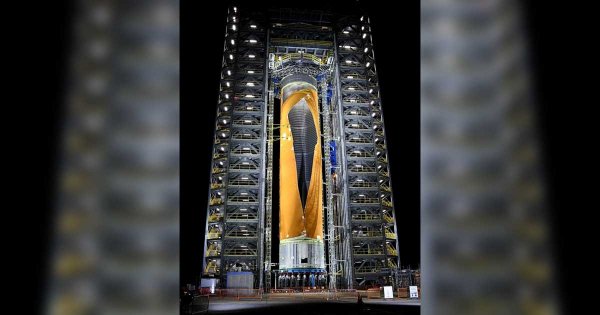
The test, conducted last week, intentionally pushed a test version of the SLS's massive liquid hydrogen fuel tank to its breaking point. The tank withstood more than 260% of the expected flight loads over five hours before engineers observed a buckling point, NASA reported. This was the largest controlled test-to-failure of a NASA rocket stage pressurized tank, according to lead test engineer Mike Nichols.
The tank is a central component of the SLS core stage and will be crucial for NASA's Artemis missions, which aim to carry both cargo and astronauts to the Moon. NASA says the SLS is the only rocket capable of delivering the Orion deep-space spacecraft, along with astronauts and supplies, to the lunar surface in a single launch.
Overcoming Years of Setbacks
The SLS program has faced numerous delays and significant budget overruns, with development costs estimated at $17 billion. Originally slated for its first test flight this year, the program has now shifted its target to 2024. The recent test marks a milestone in a project that has been under scrutiny for its extended timeline and escalating expenses.
The scale of the test was notable, with the tank making up most of the height of NASA's 215-foot-tall test stand. The deliberate failure of the tank was designed to gather data that will inform future iterations of the rocket.
"We will be flying the Space Launch System for decades to come, and breaking the propellant tank today will help us safely and efficiently evolve the SLS rocket as our desired missions evolve," said Neil Otte, chief engineer of the SLS Stages Office at the Marshall Space Flight Center, in a statement.
The successful test provides a boost of confidence for the Artemis program, which has faced criticism over its cost and schedule. With the tank's performance validated, NASA can proceed with confidence toward the first uncrewed test flight, which is now expected no earlier than 2021. The agency's long-term goal is to establish a sustainable human presence on the Moon, with the SLS serving as the backbone of its deep-space exploration capabilities.
While the program's delays and costs have drawn concern, the recent test demonstrates that the hardware is making progress. The data gathered from the failure will be used to refine the design and ensure the rocket can handle the rigors of spaceflight. As NASA looks ahead, the SLS remains central to its plans for lunar exploration and beyond.