By 2116, humanity could be vacationing in orbital hotels, establishing colonies on Mars, and using telescopes powerful enough to map oceans on distant exoplanets, according to a new report from Samsung. The 'SmartThings Future Living Report,' part of a four-part series, extrapolates current technological trends to sketch a future that is both ambitious and grounded in scientific plausibility.
The report's authors, including Dr. Maggie Aderin-Pocock, a space scientist, envision a century of transformative change. Central to their vision is the construction of a 100-meter telescope, a project they describe as the 'Holy Grail of astronomy.' Such an instrument would dwarf current observatories like the Hubble Space Telescope and the forthcoming James Webb, potentially allowing astronomers to observe solar flares on distant stars like Betelgeuse, watch matter fall into black holes, and even detect signs of non-human intelligence in other solar systems.
This leap in observational capability would be complemented by advances in gravitational wave and neutrino detectors, as well as high-resolution telescopes across the electromagnetic spectrum. Together, these tools would give humanity an unprecedented ability to survey the universe, according to the report.
From Observation to Exploration
But the report's vision extends beyond passive observation. It predicts that commercial spaceflight will become a mainstream mode of transportation, drastically reducing the time and cost of transcontinental travel. This could lead to a more nomadic human civilization, with people establishing homes on the Moon and other planets, potentially blurring national and racial distinctions.
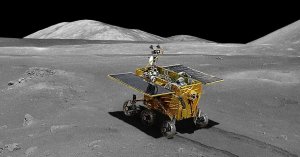
Orbital hotels are envisioned as premium vacation destinations, with quick trips to the Moon also possible. Further afield, the report anticipates colonies on Mars, sustained by the abundant subsurface water that scientists believe exists on the planet.
The report also suggests that today's space startups, such as SpaceX, Blue Origin, and Virgin Galactic, could evolve into 'multiplanetaries'—corporate entities with resources exceeding those of national governments, controlling entire planets.
For thrill-seekers, the report offers more adventurous prospects: the first human to swim in the methane lakes of Saturn's moon Titan, or to scale the cliffs of Serenity Chasma on Pluto's moon Charon. These would be the new frontiers for exploration, following the initial Mars landings.
Dr. Aderin-Pocock is quoted in the report as saying, 'The next giant leap will see Earth as so last century, as we start colonizing space.'
Beyond the Solar System
Looking further out, the report speculates on human expansion to nearby star systems like Alpha Centauri, Sirius, and Epsilon Eridani, potentially enabled by advances in light sail and antimatter propulsion. While this may seem optimistic for a century, the report notes that history often surprises us with unexpected developments.
The report acknowledges the inherent unpredictability of the future, stating that the only certain thing is change itself. It leaves readers with a sense of anticipation for the surprises that lie ahead.
The full report is available as part of Samsung's series, with links to previous parts provided in the original release.