Renowned physicist Stephen Hawking delivered a stark message to attendees of the Starmus Festival in Trondheim, Norway, on Tuesday: humanity's time on Earth is running out. He revised his previous estimate, now suggesting that our species has only 100 years left on this planet, a dramatic reduction from the 1,000 years he had projected in November 2016. The only path to survival, he argued, lies in establishing a permanent presence beyond Earth.
Hawking's remarks, reported by the BBC, were a call to action. "If humanity is to continue for another million years, our future lies in boldly going where no one else has gone before," he said. He proposed a concrete timeline: a return to the Moon by 2020, a lunar base within 30 years, and a crewed mission to Mars by 2025. These steps, he suggested, would serve as a stepping stone for exploring other solar systems.
"We are running out of space and the only places to go to are other worlds," Hawking said. "Spreading out may be the only thing that saves us from ourselves. I am convinced that humans need to leave Earth."
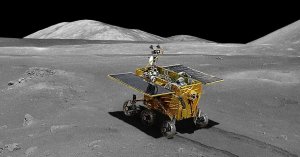
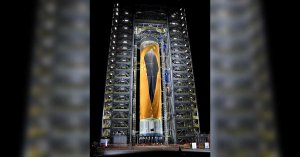
His plea comes nearly 45 years after NASA's last lunar mission, but the idea of revisiting the Moon is gaining traction beyond Hawking's advocacy. Even U.S. President Donald Trump has expressed interest in sending humans back to the Moon by 2020. Government space agencies and private companies alike are already laying groundwork for lunar exploration. NASA's plans for a Mars mission, for instance, include an orbital lunar station as a key staging point.
International interest is also growing. China and Europe have both set their sights on the Moon by the 2020s, and other nations are racing to establish their own lunar bases. This new space race echoes the Cold War era, but with a broader array of participants.
For private ventures, the Moon may be less about permanent settlement and more about tourism or logistics. SpaceX is preparing for its first privately funded round trip to the Moon, while Amazon's Jeff Bezos has floated the idea of a delivery service to support off-world construction. Hawking, however, sees lunar exploration as more than a survival strategy—it could also unite humanity.
"I hope it would unite competitive nations in a single goal, to face the common challenge for us all," he said. "A new and ambitious space program would excite young people, and stimulate interest in other areas, such as astrophysics and cosmology."
Hawking's warning, delivered with his characteristic blend of urgency and hope, underscores a growing consensus among scientists and policymakers that humanity's future may depend on leaving its cradle. Whether the timeline he proposes is realistic remains an open question, but his call has reignited public debate about the importance of space exploration.